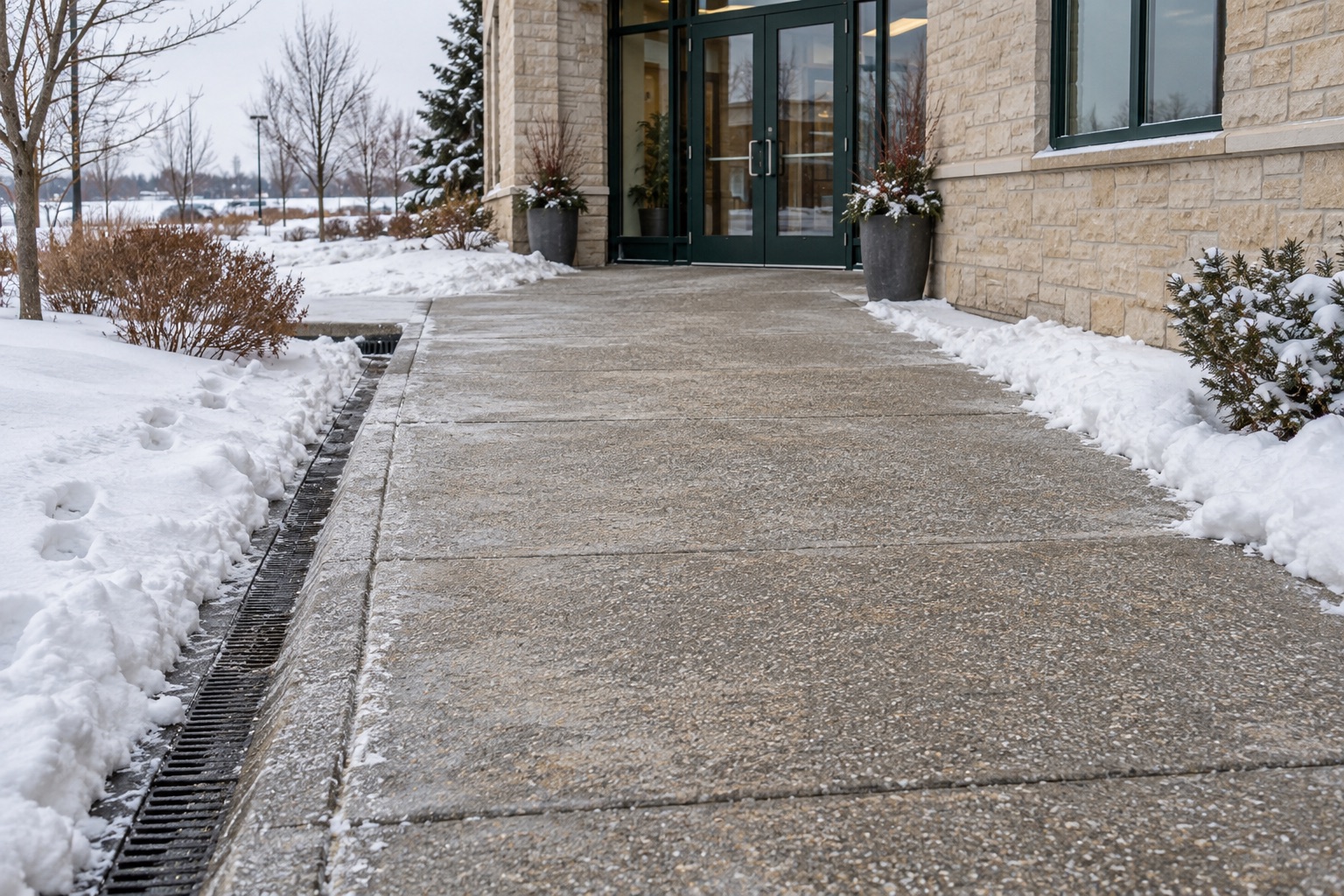
Walk the route before it snows.
Start at the accessible parking spaces, ordinary parking areas and passenger drop-off. Follow the path to the entrance as a visitor would. Look for curb transitions, ramps, stairs, narrow turns and places where people cross vehicle traffic.
Record the surfaces and obstructions along each route. A cleared entrance is less useful if the connecting path remains blocked. Prioritize continuous access, with enough detail that the person doing the work can recognize the route on site.
Notice where water moves.
Pay attention to downspouts, roof edges, low spots and drainage paths. Meltwater can travel away from a snow pile and refreeze in a place that was clear earlier. A property plan should note these locations without assuming snow service can fix a drainage defect.
Photograph recurring problem areas and raise underlying maintenance issues with the person responsible for the property. Snow placement and treatment decisions should account for the way water already moves through the site.
Separate clearing from treatment.
Mechanical snow removal and ice-control products perform different tasks. Ask which surfaces will be cleared, which may be treated and how treatment decisions are made. Product suitability depends on conditions and the surface; a generic “salt included” line may be insufficient.
Record sensitive materials and landscaping in the brief. Confirm who provides products, how additional applications are approved and what information the completion record should contain.
Plan for change after a visit.
Weather, wind, traffic and temperature changes can alter the site after service. Agree on how the property contact reports changed conditions and whether inspection or repeat treatment is part of the scope. Avoid wording that implies any surface will remain free from winter hazards at all times.
Identify a safe way to communicate an urgent concern to the agreed service contact. The general quote request form is not an emergency response channel.
Keep the property responsibilities visible.
Entrances may also need lighting, mats, drainage maintenance, signage and staff awareness. Identify who owns each task. A snow contract works best when it connects with the property’s broader maintenance routine.
For specific accessibility, occupational safety or legal obligations, consult the appropriate current requirements and qualified adviser. This guide is a practical planning aid, not a certification of compliance.
A short route checklist.
- Continuous path from parking and drop-off to the door.
- Accessible spaces and connecting routes identified.
- Steps, ramps and curb transitions included explicitly.
- Drainage and refreezing locations documented.
- Snow storage placed away from critical access.
- Clearing, treatment and repeat-service responsibilities agreed.