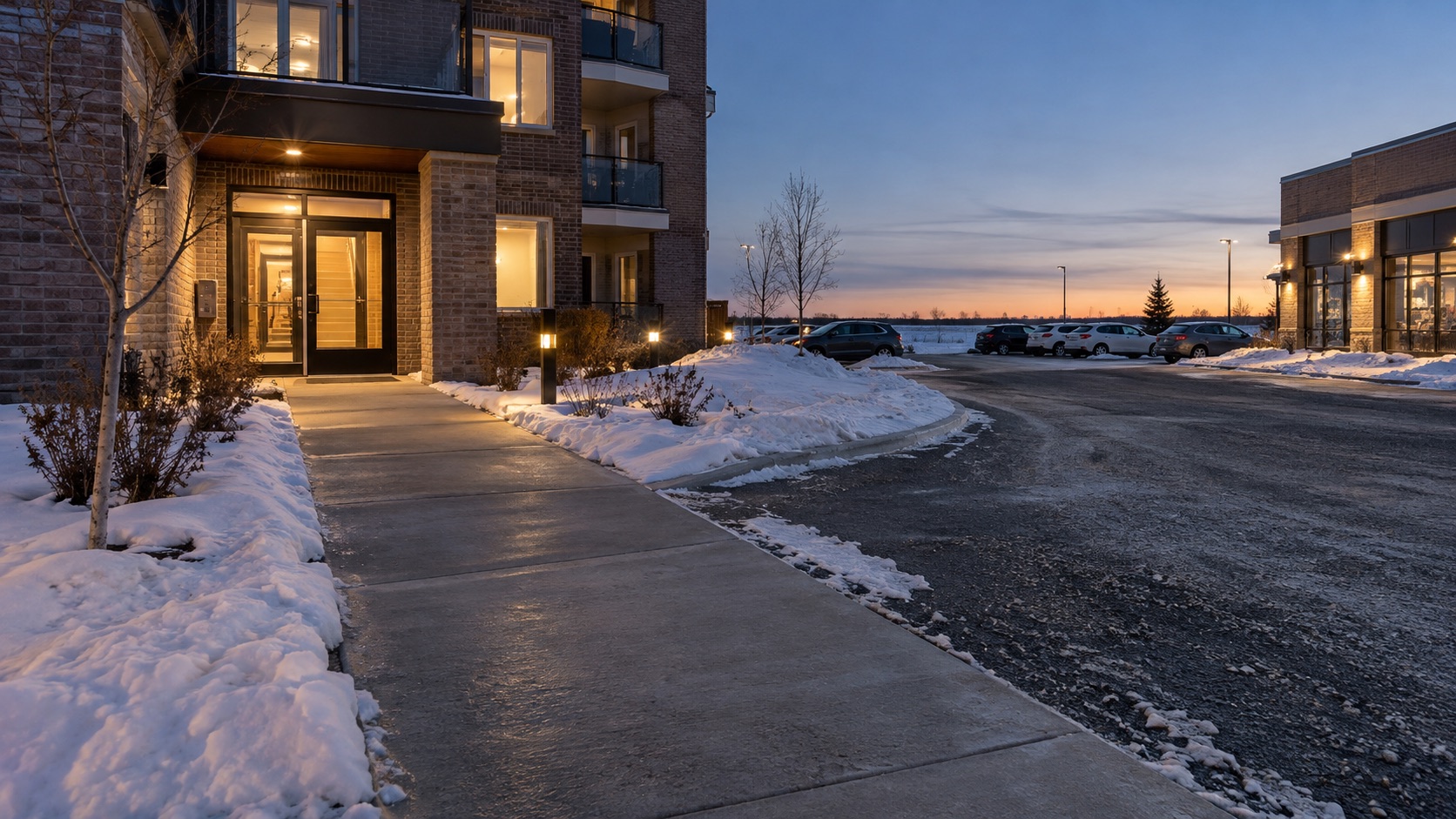
Put the property on one page.
Begin with the address, building name, authorized decision-maker and day-to-day site contact. Add a marked plan showing service boundaries, entrances, accessible routes, equipment access and snow storage areas. Keep personal information limited to what is needed for the work.
State the operating rhythm.
Record opening hours, shift changes, delivery periods, waste collection and regular events. For residential communities, describe access requirements without recording private details about individual residents. Priorities should remain understandable if the usual manager is away.
Attach the accepted scope.
Include the current quote or contract and its service period. Highlight included surfaces, snowfall triggers, ice treatment, material allowances and extra-work terms. Link to the actual agreement rather than rewriting it from memory in a separate summary.
Make approval authority clear.
Name the person who may approve extra work, hauling or changes to service. State any agreed spending limits and approval method. A staff member answering a phone does not automatically have authority to commit the property to additional charges.
Preserve a short condition record.
Use dated photographs to document curbs, bollards, planters, sensitive paving and known pre-existing damage. Mark concealed obstacles on the site plan. Keep the record accessible to the people who need it, without sharing unrelated property or resident information.
Explain the reporting path.
Include the agreed service contact, how to report a missed area and what information to send. A useful report identifies the property, exact location, observation time and a relevant photo. Avoid scattering decisions across several unrelated group chats.
Review when the property changes.
Update the handover after construction, parking changes, a new tenant, altered opening hours or a change of contact. Date the revision and make sure the accepted service scope still matches the property. A handover is useful only when it describes the current site.
Your compact handover checklist.
- Address, marked site plan and current contact details.
- Operating hours and the highest-priority routes.
- Accepted scope, service period and pricing terms.
- Extra-work approval authority.
- Condition photographs and hidden obstacles.
- Reporting instructions and latest revision date.